




Klassement
-

martinja
Leden21Punten8.257Aantal bijdragen -
Roel Dickse
Leden17Punten6.988Aantal bijdragen -
JacChicago
Leden15Punten832Aantal bijdragen -
Henk-Anna Loog
Leden13Punten1.933Aantal bijdragen


Populaire bijdragen
Inhoud met de hoogste waardering op 20-08-23 in alle secties tonen
-
9 puntenHier de aflevering van 24 juli 2011 met de 2e aflevering met de letter I. Samenstelling: Jac van IJll , Presentatie: Hans Schiffers https://www.mediafire.com/file/8nx3cecpt2y1m2u/110724+AVRO+Tijdperk+Schiffers+Archiefuitzending+letter+I.zip/file9 punten
-
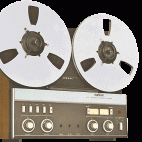
7 punten19 Augustus 1989... een zonnige Zaterdagmiddag.. Volgens mijn toenmalige echtgenote was dat een mooie dag dat ik mijn metselwerk aan de nieuwe bloemenbak in de tuin maar eens af moest maken. De avond ervoor veel opnames gemaakt van Caroline 558 omdat je wist dat er "stront aan de knikker was". Enfin, de speciekuip en troffel ter hand genomen en uiteraard de portable erbij met Caroline op 558.... en toen.. de eerste oproep van Chicago gedurende het programma van Caroline Martin. Met als gevolg... metseltroffel de speciekuip in en ik naar de hobbykamer om snel een tape op de Revox te leggen. Uiteraard daar blijven luisteren, met een echtgenote die niet zoveel had met mijn radiohobby en langzaam stoom uit neusgaten begon te produceren betreffende het inmiddels hard geworden cement.... Och, je hebt wat over voor je hobby. En toen was het plotsklaps over... 558 was nog net een paar seconden langer in de lucht dan 819... je hoorde ze nog even tegen de microfoon tikken en roepen "yes, it's gone..."... Was even moeilijk te bevatten dat het over was.... Die middag verder, met erg weinig zin trouwens, bloembak afgemaakt.. ding staat er nog steeds en ik weet nog precies bij welke steen ik toen op 19 Augustus ophield om naar Caroline te luisteren. Anoraks.... ze blijven uniek he?.. Fijne Zondag Henk Kruize7 punten
-
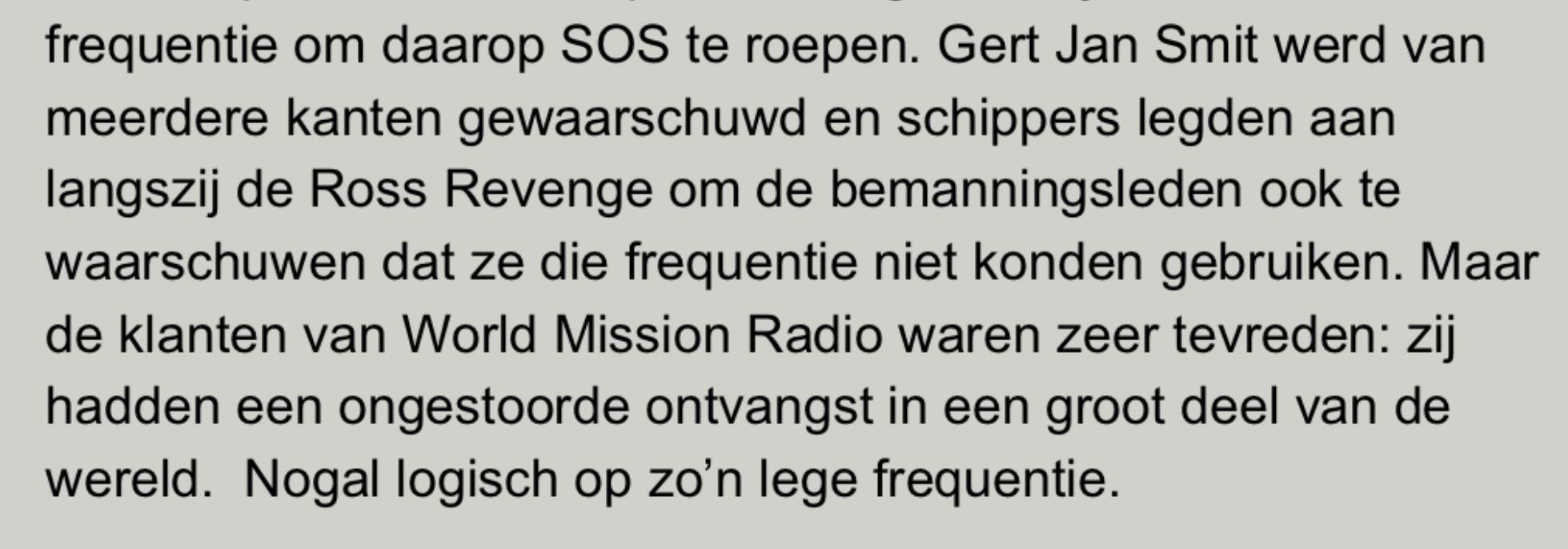
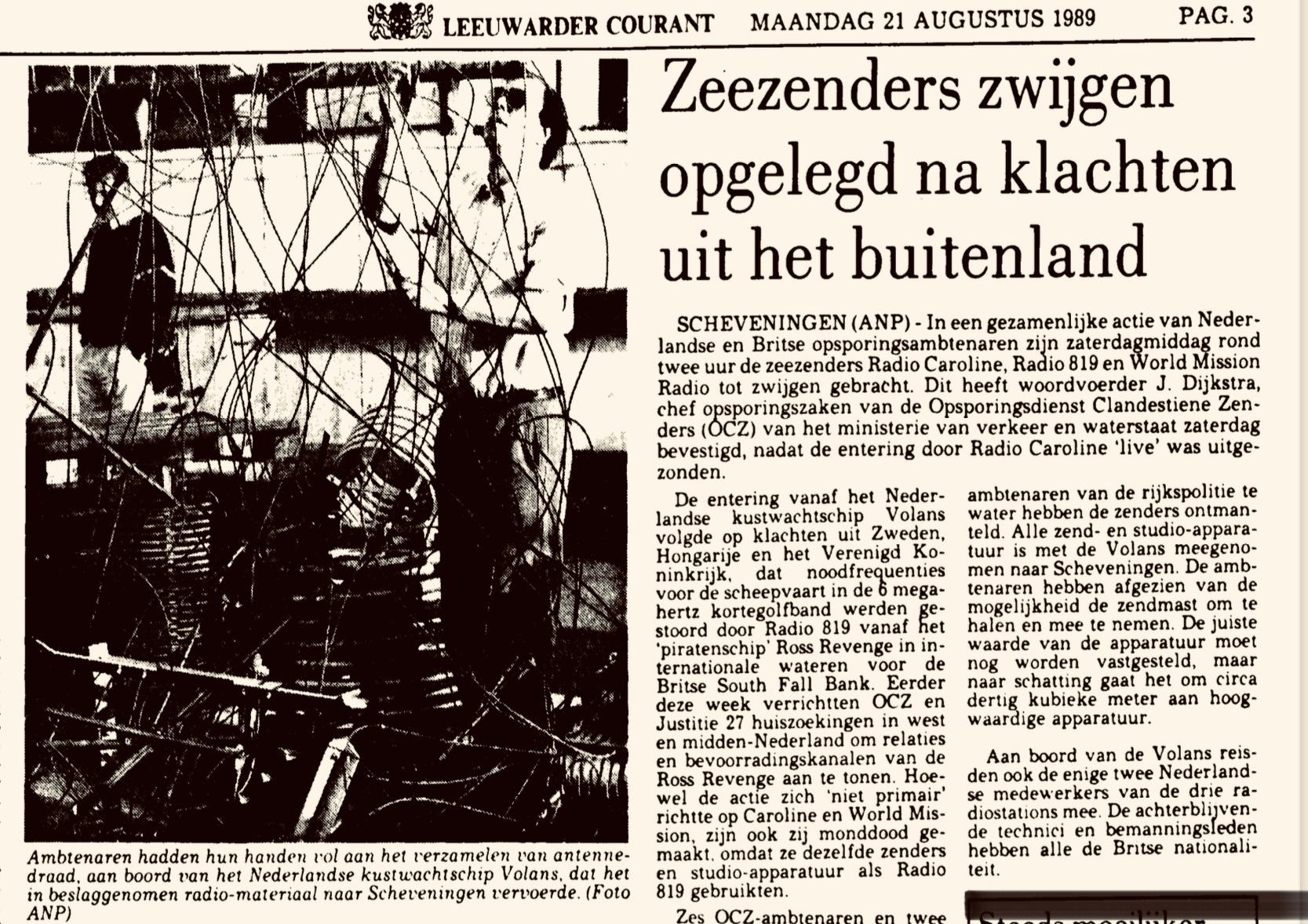
6 punten6 puntenHet mooie van deze foto’s is dat de personen gefotografeerd zijn zonder daarvoor speciaal te poseren. Alsof je over hun rug meekijkt. Ook de details van de apparatuur zijn goed te zien. Dank Douwe voor het delen en Ben voor het digitaliseren en opkappen/verbeteren van de foto's. grt Peter6 puntenBedankt voor je aanvulling, Douwe. We gaan verder waar we gisteren gebleven waren en dat is met een serie foto's, die Douwe maakte op 8 en 9 Juni 1977 in Playa de Aro. Dat zijn de foto's DD_CN_403 - DD_CN_419, met de viering van de verjaardag van Bokkebroek: En plaatjes van de Mi Amigo familie in Playa de Aro: En de laatste serie foto's uit het fotoboek van Douwe is gemaakt op 23 Mei 1982 in Playa de Aro bij Sonipro. Dat zijn de foto's DD_CN_452 - DD_CN_462 met onder andere deze foto van de Sonipro "outfit": Nu zitten er qua nummering nog een paar relatief grote gaten in het fotoboek van Douwe. Daar zitten de foto's die Douwe nam van het TV scherm tijdens de eerste Veronica uitzending op TV, tijdens het uitzenden van een Mi Amigo Special en tijdens de uitzending van The Day the music died. Van alle drie deze uitzendingen voegen we voor elk één compilatie met elk een paar beelden van de TV uitzending toe als "placeholder", waarbij het foto album van Douwe met 400 foto's compleet is. Deze compilaties zijn DD_CN_158 - 216, DD_CN_274 - 293 en DD_CN_420 - 430. Tenslotte wil ik graag Douwe bedanken voor het beschikbaar stellen van zijn prachtige foto's, Juul voor de aanvullingen en correcties, Bert en Douwe voor de correcties en allen die gereageerd hebben in dit draadje. Het album met de foto's van Douwe vind je hier.6 punten6 puntenVeronica-19731113-0916-1002-HansMondt-Tineke-MuziekTerwijlUwerkt-Koffietijd Veronica-19731113-1248-1254-WillLuikinga-WillWilWel Veronica-19731113-1254-1304-WillLuikinga-RobOut-WillWilWel-RobOutShow6 punten6 punten5 punten5 puntenHier zijn ze 19760910 1600-1700 Felix Meurders - Nationale Hitparade.mp3 19760910 1700-1800 Felix Meurders - Nationale Hitparade.mp3 All 2 files Met vriendelijke groet, Ton5 punten4 punten4 puntenIk heb ze even in mp3 geplaatst. * [BBC Radio 1 =__ Opening Shows Tony Blackburn - Rosko - Keith Skues Documentary __= Sat 30th Sep 1967 (Bron Fred Bunzl).mp3] https://pixeldrain.com/u/m2tTaUiW * [Radio 1 The First 10 Years - with Alan Freeman (1977) (Bron John B-S).mp3] https://pixeldrain.com/u/2CuF8J2z * [All 2 files] https://pixeldrain.com/l/zBs92f7s4 puntenMooi om al je foto's hier te zien Douwe, vooral de serie van 27 December 1975, ons bezoek aan de Norderney in Zaandam en de Mebo-2 in Slikkerveer waar ik en Jozef Segers toen bij waren. Onvergetelijk... Fijne Zondag Henk Kruize4 puntenTja.....London...Big L. De geroemde Fab 40 die in de onderste 20 boordevol plugplaten stond inclusief de Big L climbers. De laatste werden niet door de deejays gekozen maar lange tijd door de legendarische Tieeeedubbeljoe Tony Windsor die aanboord vd Galaxy veel koffie dronk. De bovenste 20 waren prediction standen afgeleid van de NME top 20 die als basis verkoopaantallen had. In de bovenste Big L 20 werden de platen hoger of lager geranked op basis van het "voorgevoel" welke richting het in zou gaan. De meeste Big L jocks waren This is en That was met als reddingsboei de enorme hoeveelheid commercial script < en PAMS jingels > die men diende voor te lezen als onderdeel van de presentatie. Saved by the bell zou je kunnen zeggen....ding ding. Frapant is dat de drie meest uitgesproken jocks op London in feite BBCers waren hoewel ze dat ten tijde van hun tijd op Big L nog niet wisten. Deze drie, Blackburn-Skues-Everett hadden al enige bemoeienis met de BBC voor en tijdens hun verblijf op de Galaxy en waren zelfs voor de start van BBC Radio One als acceptabel gevonden door de top binnen de BBC. Blackburn zoon van een huisarts, Skues met zijn Algemeen Beschaafd Engels en BFBS achtergrond en Everett die in zijn vroege jeugd al enkele geluiden via the BBC Home service < posher dan the Light> had mogen produceren. Natuurlijk all in the best possible taste. Het is niet zo verwonderlijk dat BBC Radio One vanaf 30 september hoofdzakelijk door ex London mensen werd ingevuld, London was acceptabel voor de BBC in tegenstelling tot die vrijbuiters van Caroline-270-City. De BBC was met name allergish voor ex Caroline jocks in de begin periode van BBC Radio One. Voor een prachtige terugblik op het begin van BBC Radio One adviseer ik Keith Skues als hij terug kijkt naar het ontstaan van Radio One vele jaren later op de Engels regionale omroep gebundeld in het zuidoosten. Luister hier4 punten4 puntenMiAmigo-19760416-1000-1100-Michelle-KoffieMetOfZonder https://pixeldrain.com/u/PdzbmBYu4 punten4 puntenMooie woorden over Fred en de andere helden daarboven... 🙂 Ik ben even bezig geweest met de uitzendingen over Paravisie 1985. Daar gaan we, aflevering 179, 180 en 185! https://we.tl/t-MXUgc9MJMU4 punten3 puntenThe raid on the Ross Revenge may have been 34 years ago, but it will always be remembered as a bleak day in the history of radio.3 punten3 puntenVoor de liefhebbers Uitgezonden 1-1-23 Originele opname Mi Amigo Top 100 1976 met Bart van Leeuwen Peter van Dam https://pixeldrain.com/u/km2Ejm213 puntenNogmaals bedankt voor alle inspanningen Ben. Mooi om dit in zo'n goede kwaliteit beschikbaar te maken en te archiveren.3 punten3 puntenHier de aflevering van 17 juli 2011 met de 1e aflevering met de letter I. Samenstelling: Jac van IJll , Presentatie: Hans Schiffers https://www.mediafire.com/file/o0hxu43hmnmoni2/110717+AVRO+Tijdperk+Schiffers+Archiefuitzending+letter+I.zip/file3 punten3 punten3 puntenNee, was idd niet de bedoeling Met dank aan Vincent MiAmigo-19760419-1500-1600-BartVanLeeuwen-Sport[1] https://pixeldrain.com/u/T4CTHYHs MiAmigo-19760419-1600-1700-PeterVanDam-PeterVanDamShow[2] https://pixeldrain.com/u/Zrvpyfyv3 punten3 puntenVeronica-19730325-1505-1523-KlaasVaak-VaaksFiasco-ThreeDogNIghtSpecial Veronica-19730423-1938-1958-LexHarding-Lexjo-MetABTT3 puntenAgain 50 years ago, it's Mike Ross presenting the International Top 30 on Friday 17th August 1973 from 8-10pm. https://www.mediafire.com/file/bv9l51c4h0vkl4s/17081972+2000-2200+MikeRossInternationalTop30.mp3/file?fbclid=IwAR2cIpSjLiXHfmOOXmh8fhVmidgljbMfibnvWt6diYG4Z3ewaevOHPTiEpk3 punten2 puntenIt was probably not Gert Jan Smit who chose the frequency but one of the Ross Revenge engineers (maybe Peter Chicago). The first Caroline tests on short-wave were on 6273 kHz in 1985 using a marine transmitter. Then other frequencies were tried in 1987: I've seen many frequencies mentioned: 9940, 9950, 6210, 6205, 6220 and 5955 kHz. There's some confusion about which transmissions came from the ship, because some land based pirates would relay Caroline programmes occasionally. Also in September 1987, it was reported that Johan Maasbach sent out details of a new radio station starting soon: "World Mission Radio" on 6205 kHz using 10kW, however in November 1987 the frequency was given as 6210 kHz and it was supposed to start "within about 14 days" (then the mast collapse intervened, of course). (Sources for all the above: http://www.offshoreradiomuseum.co.uk/page425.html , Anoraks UK 1987 issues and http://pirate.wireless.org.uk/diary4.htm). When they resumed testing on short-wave in early 1988, they started with 6210 kHz. At the beginning of March 1988, an Anoraks UK contributor mentioned about 6215.5 kHz being an emergency channel and that splatter from 6210 kHz was a problem for RNI in the 1970s (they were jammed by Rogaland Radio in Norway. Then RNI moved to 6205 kHz and the jamming stopped). Caroline later tested both 6205 kHz and 6215 kHz (the former was already used by HCJB in Ecuador and the latter had some SSB interference). They settled on 6215 kHz just before the launch of World Mission Radio and stayed on that frequency until August 1989. Also interesting: "The frequency of 6215kHz was a concern. I recall at the time photocopying a few pages from respected utility expert, Jorg Klingenfuss, and trying to send them to Chicago via a friend down south. Whether these photo copies ever reached the ship is anyone's guess, as the station remained on 6215, a secondary emergency frequency. This was certainly not a clever idea, and various dxers who had some knowledge of SW tried to tell Caroline not to use the channel. Even if the frequency wasn't really used, it was another excuse from the authorities about interference." (Source: http://www.dxarchive.com/offshore_caroline_raid_august_1989.html ) The short-wave transmitter was switched off the day before the raid. The OCZ seemed much more concerned with closing Radio 819.2 puntenZe wisten (dan) zeker niet dat Tony Blackburn en Keith Skues gewoon ex Radio Caroline dj's waren. 🙂 Schrijf je jingles nou expres verkeerd? Hik. '' After considerable interpersonal wrangling at management level Radio London had decided on one particular interpretation of the American Top 40 format; not surprisingly it was the one then being relayed by KLIF Dallas. London’s chosen ‘Fabulous 40’ package consisted of three categories of records: an ‘A’ list, consisting of the Top Ten records of the week, a ‘B’ list consisting of the remainder of the Top 40, and a ‘C’ list consisting of new releases. In addition to this there were slots for LP tracks, and hits from the past – the first time ‘oldies’ were played as a distinct category on British pop radio. DJs were forbidden from choosing their own records, and had a ‘Top 40 climber’ selected for them each week by station management. In time-honoured fashion the presenter simply had to endorse the product.'' '' A format that has been enormously successful in the States is the Top 40 format. And this means simply playing the top 40 records of the week – and incidentally this is nothing to do with the charts, nothing to do with which records happen to be selling, because in fact those aren’t the top 40 records of the week. They are the top 40 records of about three or four weeks ago. By top 40 we really mean the best of the new records that are coming along now. (Philip Birch)'' https://monoskop.org/images/6/65/Chapman_Robert_Selling_the_Sixties_The_Pirates_and_Pop_Music_Radio.pdf '' In stark contrast to the station’s extremely professional daytime output nocturnal programming had always seemed like a managerial afterthought. Owing to the strong interference from foreign stations that Radio London suffered during the hours of darkness the night-time listenership had always been a fraction of what it was during the peak daytime period, and there was a corresponding lack of interest from advertisers. The slot was initially filled by a show called London after midnight, which played light music, and had less emphasis on a rigid Top 40 format. Throughout 1966 the programme was subject to the whims and musical preferences of individual DJs who seized the opportunity to be selfindulgent at a time when audiences could in all probability be measured in five figures rather than seven. One school of thought, dictated by senior announcers such as Paul Kaye and Duncan Johnson, was that the programme should adhere to its original light music brief. Junior announcers were often less faithful to this policy. Tony Blackburn, for instance, initiated a weekend soul music programme. It was this haphazard scheduling inheritance that enabled John Peel to develop his programming ideas without resistance. He started playing the kind of music which was emerging, predominantly but not exclusively, from the west coast of America, and from the burgeoning underground scene in London, which had up to this point received virtually no exposure in the UK.'' https://monoskop.org/images/6/65/Chapman_Robert_Selling_the_Sixties_The_Pirates_and_Pop_Music_Radio.pdf2 punten2 punten2 punten2 puntenstaat een mooie fout in radio 819 die stoort op de 6 megahertz, was dat niet world mission radio?? Maar vindt het wel vreemd dat men toen juist voor die korte golf frequentie hebben gekozen, hebben ze niet kunnen weten dat ze de scheepvaart konden storen op deze frequentie?2 puntenIk weet niet precies hoe je dit download Juul. Via Mixcloud downloader mischien? Wat ik meestal doe is het afspelen en opnieuw opnemen. Overigens is de volgende link het overzicht van 10 jaar BBC Radio One, onnavolgbaar aanééngesproken door wijlen Alan Freeman. Hoorbaar wordt de evolutie van het station tussen 67 en 77. Een evolutie waar Big L nooit aan toe kwam in de 2 en driekwart jaar van het bestaan. Mischien een beetje met de introductie van Peels Perfumed Garden. 10 jaar Radio One2 puntenMooie foto's van een legendarisch stuk geschiedenis. Leuk om na zoveel jaren toch nog een kijkje achter die schermen te kunnen nemen. Dank voor alle moeite dan ook!2 punten2 puntenDank Jochem, heel blij mee. voor mij zijn de paravisies alleen bekend van de verhalen. Was in die tijd nog erg jong en ben er dus nooit geweest.2 punten2 punten2 puntenWeer zeer bedankt - ik hoor nog zo tussendoor oude uitzendingen terug - altijd leuk2 puntenAls iemand dit zou willen doen, dan graag en bedankt Groetje, Martin2 punten2 puntenHier de aflevering van 10 juli 2011 met de 18e (en laatste) aflevering met de letter H. Samenstelling: Jac van IJll , Presentatie: Hans Schiffers https://www.mediafire.com/file/ewg7mf5truf1cfn/110710+AVRO+Tijdperk+Schiffers+Archiefuitzending+letter+H.zip/file2 puntenWil je deze NHP nog eens opnieuw posten van 10-9-1976 ?2 puntenDit mengpaneel ontbreekt (helaas) in de studio die ik een aantal jaren geleden in Playa heb gekocht. Was ook gelijk (namens de toenmalige eigenaar) door Bokkebroek gemeld toen ik belangstelling toonde. Achterover gedrukt door iemand van de Spaanse fiscus voor de studio op een openbare veiling werd aangeboden. https://radiovisie.eu/de-radiostudio-van-mi-amigo-is-terug/2 punten2 puntenVeronica-19730000-Tineke-5min Veronica-19730810-1400-1414-RobOut-RobOutShow Veronica-19731220-1300-1408-RobOut-BartVanLeeuwen-RobOutShow-BartVanLeeuwenShow2 puntenNog een te 'snel' top 40 format was helaas verkeerd gekozen, en het zuster station ( Britain Radio) had (de) pech dat Radio 390 er al was. --------------------------------------------------------------------------------------------------------------------------- ''Of course we didn’t want to sound like the BBC. What we were doing was taking an American Top 40 format – and there were at least half a dozen others we could have chosen – and we were adapting it to the British ear. I think at times we sounded very transatlantic. (Philip Birch) '' https://monoskop.org/images/6/65/Chapman_Robert_Selling_the_Sixties_The_Pirates_and_Pop_Music_Radio.pdf --------------------------------------------------------------------------------------------------------------------------- Misschien had Philip Birch ze het 'geheime' lijstje kunnen geven met de 6 formats die grote kans van slagen hadden.1 punt1 puntIk ben opzoek naar opnames van Jan de Hoop als presentator bij Radio Rijnmond. Groet Marcel.1 punt1 puntIk blijf het leuk vinden, maar toch beperkt, want zoals het nu gaat, gaat het. Weer leuk je te lezen1 puntHallo Hendrik, al een eentijdje geleden en toch ben ik nog steeds aan het genieten van "Rock'n Roll Museum" mit Werner Voss. Niet alleen de muziek, maar ook de massa aan informatie die je meekrijgt in elke aflevering is gewoonweg onvoorstelbaar. Een voorbeeld van hoe je omgaat met de muziekgeschiedenis van Rock'n Roll. Daarom nogmaals bedankt !!!!!!1 punt1 puntMiAmigo-19760331-1630-1720-PeterVanDam-MeldingVeronicaOpMiAmigo https://pixeldrain.com/u/zonX64hy1 punt1 punt1 punt1 puntHelaas over en uit maar voor die gene die er geen genoeg van kunnen krijgen of het hebben gemist staan de laatste 6 uur op Mixcloud. Als je doorklikt naar de pagina op Mixcloud vind je ook de link naar de mp3 versie.1 punt1 puntMet dit, wat mij betreft, hoogtepunt uit het archief van Kurt Sellenthin (voorheen Kristkowitz), beschikbaar gesteld door Werner Tschoepe, besluit ik het delen van audio opnamen van Kurt. Al deze opnamen komen van André Blondeau. RNI 14-08-1972 00:00-02:15 Rob Eden RNI 14-08-1972 02:28-03:04 Rob Eden RNI 14-08-1972 06:00-07:00 Leo van der Goot Ochtendeditie RNI 14-08-1972 07:00-08:00 Leo van der Goot Ochtendeditie RNI 14-08-1972 08:00-09:00 Leo van der Goot Ochtendeditie RNI 14-08-1972 09:00-10:00 Alfred Lagarde Espresso RNI 14-08-1972 10:00-11:00 Alfred Lagarde Espresso RNI 14-08-1972 11:00-12:00 Peter Holland Doorsnee Noordzee RNI 14-08-1972 12:00-12:29 Peter Holland Doorsnee Noordzee RNI FM op 14 Augustus 1972 Graag wil ik allen bedanken voor het aanleveren van aanvullingen en correcties. Ik wil besluiten met nog een technische toelichting. Alle opnamen heb ik gecorrigeerd op snelheid (soms was dat een simpele ingreep, soms vroeg dat een wat complexere ingreep omdat de snelheid van de band gedurende de opname nogal wat had gevarieerd). Ik heb geprobeerd om bij zowel de FM als de AM opnamen storingen, veroorzaakt door de omgeving tijdens de opname (auto's, bromfietsen, het weer, elektrisch geschakel) zoveel mogelijk te verwijderen. Bij alle opnamen en vooral bij de FM opnamen heb ik de frequentiekarakteristiek gecheckt en aangepast Ruis heb ik zoveel mogelijk verwijderd. Waar er een "gat" in een opname zat (stuk van een plaat, dat mist) heb ik dat gedicht. Dat alles hierboven vraagt veel tijd maar verhoogt het luistergenot en dáár gaat het uiteindelijk om. Nog veel luisterplezier gewenst met alle opnamen uit het archief van Kurt!1 punt1 punt1 puntzou je misschien je papa willen verwittigen en vertellen van deze forum, misschien wil je pappa zijn verhaal hier wel delen, want dat zou leuk zijn.1 puntDit klassement is ingesteld op Amsterdam/GMT+02:00















Belangrijke informatie
Door gebruik te maken van deze website ga je akkoord met Gebruiksvoorwaarden, Privacybeleid en Richtlijnen.
Account
Navigation
Zoeken
Browser pushmeldingen configureren
Chrome (Android)
- Tap the lock icon next to the address bar.
- Tap Permissions → Notifications.
- Adjust your preference.
Chrome (Desktop)
- Click the padlock icon in the address bar.
- Select Site settings.
- Find Notifications and adjust your preference.
Safari (iOS 16.4+)
- Ensure the site is installed via Add to Home Screen.
- Open Settings App → Notifications.
- Find your app name and adjust your preference.
Safari (macOS)
- Go to Safari → Preferences.
- Click the Websites tab.
- Select Notifications in the sidebar.
- Find this website and adjust your preference.
Edge (Android)
- Tap the lock icon next to the address bar.
- Tap Permissions.
- Find Notifications and adjust your preference.
Edge (Desktop)
- Click the padlock icon in the address bar.
- Click Permissions for this site.
- Find Notifications and adjust your preference.
Firefox (Android)
- Go to Settings → Site permissions.
- Tap Notifications.
- Find this site in the list and adjust your preference.
Firefox (Desktop)
- Open Firefox Settings.
- Search for Notifications.
- Find this site in the list and adjust your preference.